Pioneering With Laminated Spars

The following text is by Pioneering Legend, Adolph Peschke, author of the renowned 1993 edition of the Boy Scouts of America’s Pioneering Merit Badge Pamphlet, from his treatise entitled “Pioneering With Laminated Spars.” Some additions have been included in this post, for the purpose of practical elaboration.

Suggestion: Prior to using them to build a project, to eliminate the lashings from slipping on the smooth surfaces of the Laminated Spars, wrap six inches of friction tape tightly around the areas where the spars will intersect one another .

LaminatedSparsTitle

LSMB1
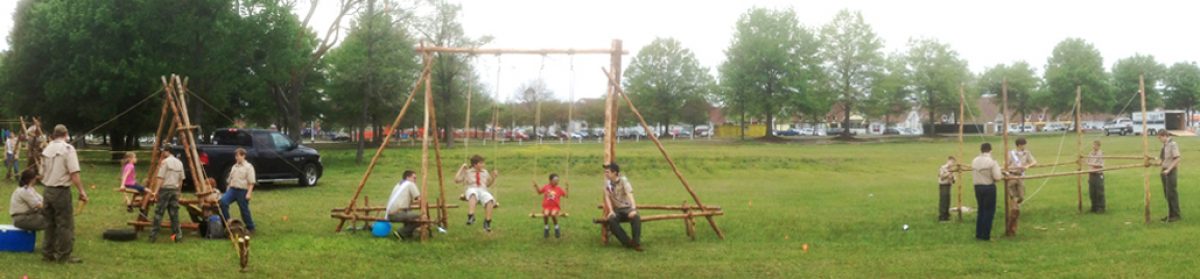
Building an A-frame using Laminated Spars

Just what are laminated spars? They are similar in size and length to the natural tree spars that have been used for many years bt Scouts in the construction of Pioneering structures i.e.: bridges, towers, and in other camping projects.

This kit of Laminated Spars are fabricated using pieces made from standard lumberyard shapes. Here, two or more wood shapes are glued and nailed together to obtain a strong cross-section and length of the finished spar needed in building structures using ropes and spars. This method of gluing and nailing pieces of wood together has long been used by wood workers to gain the strength that a single piece of wood does not provide.

Lashing together 2 A-frames made with Laminated Spars

Important to Scouts is the fact that the same knots and lashings used with natural spars in building bridges, towers, etc. can be used with these Laminated Spars.

Because natural spars have become harder for Scout troops to obtain due to changes in conservation practices and the fact that suitable species of trees that provide the best spars are just not available for harvest in many areas of the country, Laminated Spars are a means for the Scout troop to have its own “kit” for a full program of “boy sized” Pioneering for teaching – learning – advancement – or just fun and action projects.

T h e  T r o o p  K i t

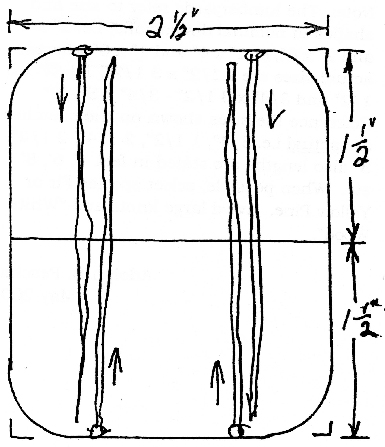
  • 4 ea.   Trestle Legs, 2-1/4″ x 2-1/4″ x 6′
  • 4 ea.    Ledgers Upper/Lower, 2-1/4″ x 2-1/4″ x 4′
  • 1 ea.     Transom, 2-1/2″ x 3″ x 4′
  • 4 ea.    “X” Braces, 1-1/2″ x 2- 1/4″ x 6′
  • 12 ea.  Walkway Cross Spars, 1-1/2″ x 3″ x 3′
  • 4 ea.    Walkway Cross Spars, 1-1/2″ x 3″ x 4′ (a little longer than specified but more thrifty)
  • 4 ea.    Walkway Laterals, 2-1/2″ x 3″ x 10′
  • 2 ea.    Walkway Planks, 2″ x 8″ x 8′

Refer to the Pioneering Merit Badge Pamphlet for knots, lashings, and building instructions for the Single Lock Bridge.

Materials: It is not necessary to buy choice lumber. A good construction grade should do, if you can buy from a lumberyard that lets you pick and select what you buy.

Note: The lumberyards refer to size and shapes in nominal dimensions, i.e.

  • 2″ x 4″ actually is: 1-1/2″ x 3-1/2″
  • 2″ x 6″ actually is: 1-1/2″ x 5-1/2″
  • 1″ x 4″ actually is: 3/4″ x 3-1/2″
  • 1″ x 6″ actually is: 3/4″ x 5-1/2″

Reference the sizes shown on the sketches are actual i.e. 3/4″, 1 and 1/2″, 2 and 1/4″, 2 and 1/2″ , 3″. Also lengths are stated in feet: 4′, 6′, 8′, etc. When possible, select species Fir or Yellow Pine. Avoid large knots and “White Wood.”

Fabrication of Laminated Spars – All work should be done or supervised by adult leaders and/or skilled craftsmen.
LS1TRESTLE LEGS & LEDGERS: (as per The Troop Kit)

Materials needed: one 1 x 6 x 4-foot.,  one 2 x 6 x 4-foot, one 1 x 6 x 6-foot, one 2 x 6 x 6-foot boards

These lumberyard shapes may be bought in 8 and 12-foot. lengths.

Rip lumber to 2-1/4-inch strips and cut to 4  and 6-foot lengths.

Spread glue evenly on both pieces and nail with 6D Hot Dip Galvanized Nails along both sides with 10-inch staggered spacing. Leave clearance for 1/2-inch Round Over Router Bit. Paint the ends of the 4′ spars white, and the 6′ spars red.

LS2THE TRANSOM SPAR: The Transom Spar is a stout spar used on many different bridges to support the walkways where they meet at the center of the bridge. When the walkways are lashed to it, it makes a continuous unit.

Material needed: The Transom Spar can be made from one 2 x 4 x 8-foot stock. Rip the lumber to 2-1/2 inches and cut it into two 4-foot lengths.

Spread glue evenly on two sides and nail using 10D Hot DIpped Galvanized Nails. Drive nails from both sides at an angle (to prevent penetrating the opposite side). Router 1/2-inch round over all four edges. Paint ends white.

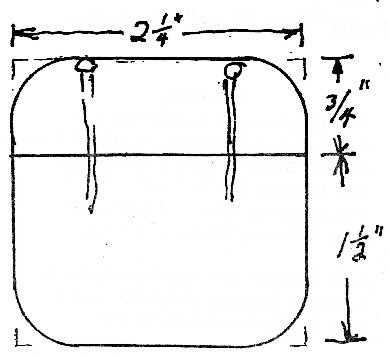
LS3TRESTLE “X” BRACES (as per The Troop Kit)

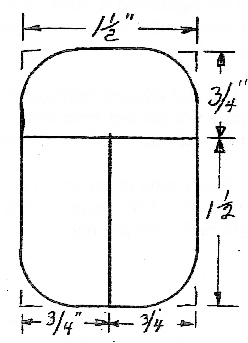
Materials needed: Four 1 x 6 x 6-foot boards. Rip each piece into three 1-1/2-inch strips.

Note: Once you have ripped the three pieces into into 3/4 x 1-1/2-inch strips, it is easier to run the 1/2-inch round over the edges.  See the sketch BEFORE routing. One piece gets 2 edges rounded, and the other two get one edge only. Becasue the strips are narrow, it is best to route round overs before nailing.

Use 1 and 1/4-inch Ring Shank Nails.

The finished spar is 1-1/2″ x 2 -1/4″ x 6 feet.

Paint the ends red.

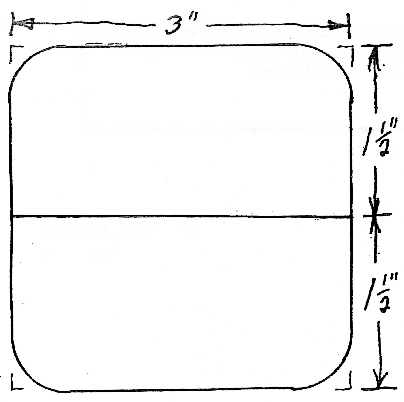
WALKWAY CROSS SPARS (as per The Troop Kit)

Materials: Six 1 x 6 x 6-foot boards and two 1 x 6 x 8-foot boards

These spars have the same cross section as the “X” Braces above. Twelve of them are made from 6-foot sections and then cut into 3-foot lengths, and four of them are made from 8-foot sections and cut into 4-foot lengths.
LS4WALKWAY LATERAL SPARS (as per The Troop Kit)

Materials: eight 2 x 4 x 10-foot boards.

Rip these to 3 inches. It will take two to make each 3-inch x 3-inch x 10-foot spar. Round over with 1/2-inch bit on two edges only. Spread glue and nail from both sides using 10D Hot Dipped Galvanized Nails.

Note: Drive nails on an angle to prevent the tip from penetrating the far side.

Paint ends black.

Tools: The most practical method to reduce sizes of lumberyard shapes to the dimensions called for on the sketches is to use a circular table saw for ripping and an electric router to make the round-over cuts on the edges.

Caution: All power tools must be operated only by skilled adults, in accordance with the manufacturers specifications. Work in a safe place and follow safety rules.

Older Scouts may help with gluing and nailing.

A few “C” clamps will be needed to keep the pieces in line while being nailed.

Double A-Frane Monkey Bridge built with Laminated Spars
Double A-Frame Monkey Bridge built with Laminated Spars

Glue: Use Tightbond II (Blue Label) and spread with a roller to get a complete and even spread.

Nails: Use Hot Topped Galvanized Nails. Your spars will get wet from time to time so rust-proof nails are the best choice.

Paint: Small cans of brush on are best and much cheaper. A 4-inch gauge marker for the ends will make the job neater.

Note: Use the Boy Scouts of America Pioneering Merit Badge Pamphlet for instructions in knot tying and lashing. With this Troop Kit of Laminated Spars, you should be able to build the Single Lock Bridge.

Adolph E. Peschke

May, 2001

Some more notes: It will definitely pay off to wrap the spars with friction tape at the points where the lashings will be tied! (Same goes for slick, green bamboo.) In lieu of tape, use a bastard cut wood rasp file and form a slight roughed out indentation at the places where lashings will be applied, to eliminate sliding on the slick surface of the spars.

The colors for coding the spars at the tips are suggestions and bot universal. The colors chosen can be in accordance with those used by your unit, district, or council.

Prepare eight 2-1/2″ x 3″ x 8′ spars and four 2-1/4″ x 2-1/4″ x 6′ spars and you have the poles required for a Double A-Frame Monkey Bridge.
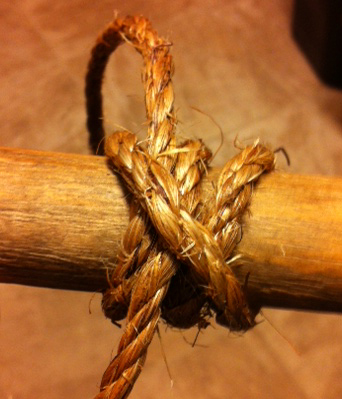
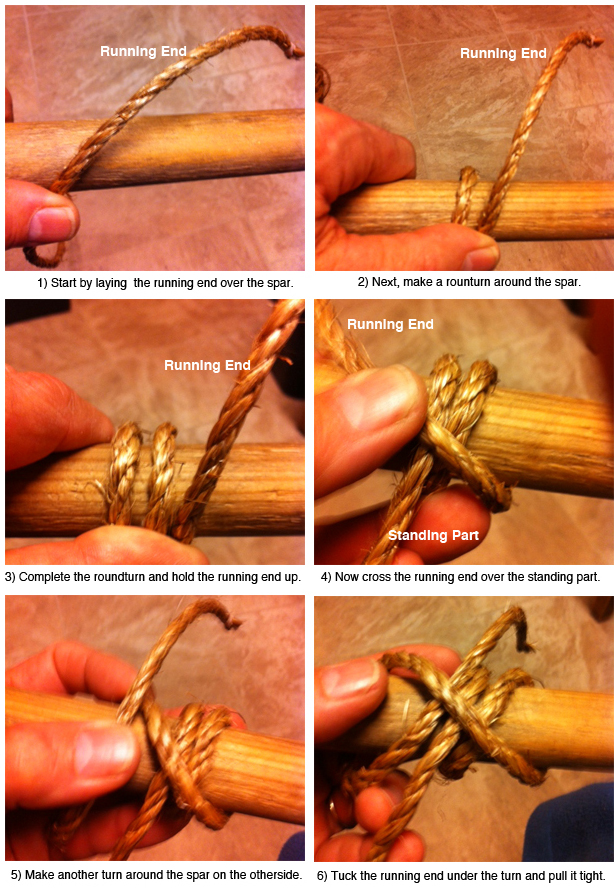
Favorite Pioneering Knots: Rolling Hitch

VIEW VIDEO: How to Tie a Rolling Hitch

A Very Useful Hitch!

John Thurman lists the rolling hitch (also known as a Magnus Hitch) as one of the essential pioneering knots. It’s similar to a clove hitch, but it’s a lot less likely to slip under a sideways pull. When securing a guyline to a horizontal spar, the rolling hitch can be used in lieu of a roundturn with two half hitches. It is also useful to attach a rope to another rope that has strain on it. Make sure that the direction of the pull exerted on the rolling hitch is against the double strand.

Link to: Older Pamphlet Info.Here’s how Adolph Peschke describes the rolling hitch in the ’93 edition of the Pioneering Merit Badge Pamphlet:

As you become more involved in pioneering activities, you will find that there are many uses for the rolling hitch. After the roundturn is made, it supplies enough grip for you to complete the knot with ease, even when the line is under strain. Further adjustment can be made without completely untying the knot, by loosening the knot slightly, pulling the rope tight, and tightening the knot again.

When the rolling hitch is tied to a spar, pull can be exerted either perpendicular to or along the length of the spar. After exerting heavy pressure, it will untie easily. When you need extra gripping power, just add extra turns. It works well with slippery or wet rope.

Pioneering Uses

When you want to tie a rope to a stake or a spar, the Rolling Hitch can be loosened easily to take up slack, and then retightened.

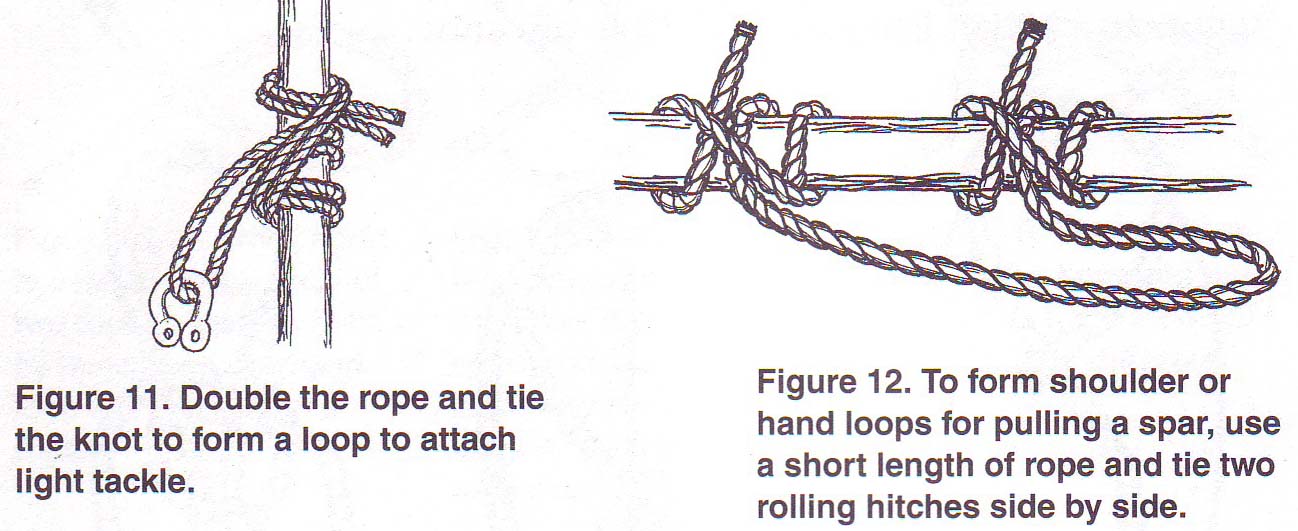
To attach a light tackle, double the rope over to form a bight, and tie a Rolling Hitch with a loop for the tackle (see figure 11).

To form a hand or shoulder loop to pull a spar, tie two rolling hitches, one at each end of a short rope (see figure 12).

From Older Merit Badge Pamphlet
The more you use it, THE MORE YOU'LL USE IT!
The more you use it, THE MORE YOU’LL USE IT!

Scout Meeting Challenge: Free-Standing Flagpole

This design idea was retrieved from John Thurman’s Pioneering for the Patrol.

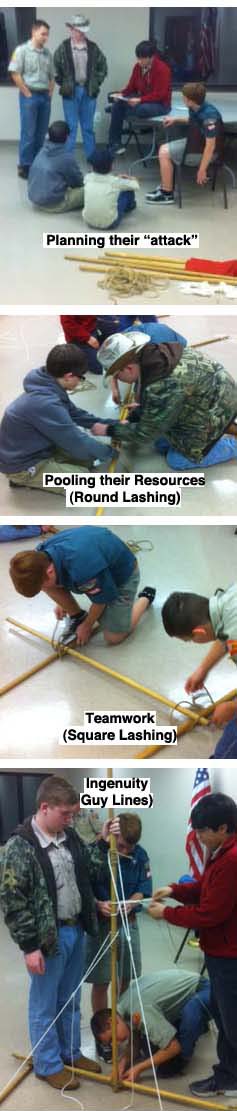
Planning their attack, pooling their resources in tying round lashings, using teamwork in applying the square lashings, and ingenuity in adding the guylines.
Interpatrol Pioneering Challenge

When the patrols have learned their round lashing and square lashing, they’ll be ready for this indoor challenge which gives them an opportunity to use what they’ve learned in a new way. Additionally, they get to plan their “attack,” pool their resources, use their ingenuity, and put into practice the teamworking skills necessary to complete the task.

Materials needed for each patrol:

  • six 5-foot Scout Staves
  • seven 6 to 10-foot x 1/4-inch manila lashing ropes
  • four light guylines
  • one 15-foot light line (for halyard)
  • one 3-foot cord (to make top loop for halyard)
  • two pencil-sized sticks (if needed to secure patrol flag to halyard through existing grommets)
  • their patrol flag

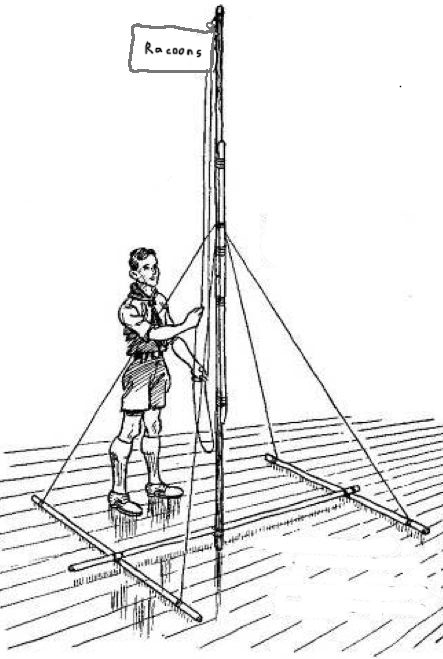
The challenge. Ask the patrols to each build a self-standing flagpole capable of raising and lowering their patrol flag. Have the necessary materials on hand, and present them with the following design:

NOTE: This challenge can be presented without the design! If no design is provided, and just the challenge is given as stated above, the Scouts will be confronted with having to figure out their own approach that will work! However, the design is ingenious and sooner or later worthy of being shared.

Some thoughts:

1) This self-standing flagpole is ideal when a flagpole is desired indoors (or outdoors when there’s no way to drive stakes into the ground or dig a hole).

Set a time limit and make it a race.

2) Depending on the ceiling’s height, the flagpole can be built higher merely by lashing on additional pole sections.

3) To shorten the pole if the ceiling is lower than 10 feet,  just round lash two staves together.

4) Naturally, following the design, the Patrol Leader can have members of his patrol divide the tasks so that the pole and the support frame are constructed simultaneously.

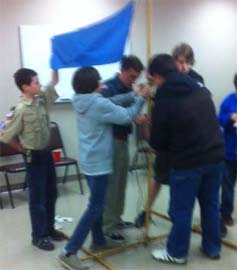
Got it up!
Got it up!

5) The method of placing two 5-foot staves end to end, and lashing a third joining stave in the middle where the two others touch can be seen as somewhat of a departure, but will yield a very stable 10-foot flagpole, provided the four Round Lashings are tight and well-spaced.

6) The 3′ cord for the halyard loop can be fastened to the top stave in a variety of ways: a bowline with a clove hitch, a bowline with two half hitches, a doubled over rolling hitch, etc., etc.

7) The guylines can also be attached in a variety of ways (and will be), though rolling hitches around both the pole and the support frame are recommended.

SCOUT MEETING CHALLENGES MAIN PAGE

Tool Rack 2

Tool Rack 2

Please refer to the “sales pitch” provided in the Tool Rack post spelling out all the advantages inherent in building one of these simple camp gadgets. It is a good-looking campsite improvement project, but mainly, it’s got major functionality.

The main difference between this version and the other is with the first tool rack, all the tools are hung, suspended by a cord from the upper cross piece and are supported by resting against the lower cross piece. In this tool rack, the tools’ handles are slipped in between two parallel cross pieces. This way, they’re held very nicely in place, and any shifting or wobbling around, often experienced in the first rack, is eliminated.

The two racks are also constructed in like manner, again refer back to the Tool Rack post. No need repeating it here. However, in this version, the diameter of the two 6-foot uprights need to be a little larger than the diameter of the thickest handle of any tool you’ll be hanging.

Click on the image for a larger view.
Parallel Square Lashings

When you’re ready to lash on the cross pieces, lash on the first higher than the longest tool. It needs to be at a height easy enough to comfortably place the tools on and take the tools off the rack, without needing to reach up too high or bend over. Secure the first cross piece in front of the uprights with a couple of tight square lashings, and then secure the second cross piece to the uprights in exactly the same position, but on the other side of the uprights. You’ll be tying a tight square lashing here too, and there’s plenty of room to wrap and frap. That’s all there is to it.

By the way, if you’d like to erect a cover over the tool rack, lash another cross piece to the very top, and rig up a tarp, using this third cross piece as a ridge pole.

Protecting the tools from rain and providing a covered area for storage.

SaveSave

Double Floor Lashing

VIEW VIDEO: How to Tie a Double Floor Lashing


View the pictorial illustrations below!
Scroll down for a revealing pictorial illustration!

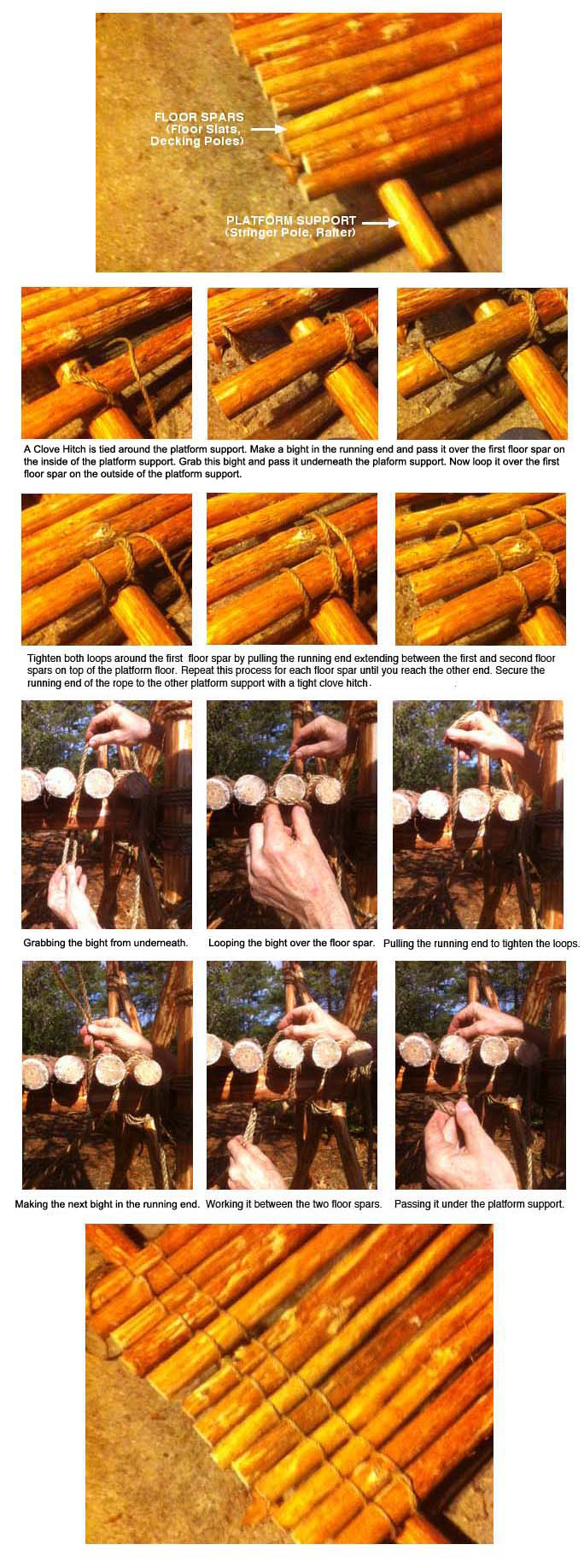
With the Double Floor Lashing, the floor spars (floor slats, decking poles) are attached (looped) in two places, on either side to each platform support (stringer pole, rafter). This means, when pulled tight, this lashing makes the platform floor, raft, deck, or walkway, more secure. View Video

  • The lashing starts with a simple clove hitch around a platform support on the inside of the first floor spar. Secure the short end of the rope by wrapping it round the running end forming a twisting pattern in the same direction as the rope’s weave.
  • Make a bight in the running end and pass it over the first floor spar on the inside of the platform support.
  • Grab this bight and pass it underneath the platform support.
  • Now loop it over the first floor spar on the outside of the platform support.
  • Tighten both loops around the first floor spar by pulling the running end extending between the first and second floor spars on top of the platform floor.
  • Repeat this process for each floor spar until you reach the other end.
  • Secure the running end of the rope to the other end of the platform support with tight half hitches.

NOTE: Throughout the whole Double Floor Lashing process, except when pulling the running end to tighten the loops around each floor spar (or securing the end of the rope to the platform support), you’re always working with a bight in the rope.

The whole process can be done simultaneously on the other platform support, or completed one support at a time.

Double Floor Lashing

Depending on the size of the platform, a good length of lashing rope is needed for this floor lashing—a 50-foot length for a platform six feet long, a 35-foot length for a four foot platform. Shorter lengths can always be tied together if you run out of running rope during the process. When building a platform that will be walked over or stood upon, use 1/4-inch manila. If you’re lashing a platform for a Chippewa Kitchen, binder twine works fine.

A Chronicle of Troop Events, Accomplishments, and Projects: 1998-2002

NEWSLETTERS:

Hand Wash Station

This Wash Station is a Great First Class Camp Gadget!
Washing up before lunch.

This wash station is the ideal First Class Camp Gadget! It’s sturdy, portable, and very useful when camping away from washroom facilities. Inherent in its design is a sound approach to a variety of pioneering concepts and skills. When this project’s built with all the lashings tight and all the legs, cross bar, and support pieces properly positioned, it’s a fine example of a well-engineered, highly functional camp gadget. Each of the three legs making up the tripod gets a lashed on support piece, and the wash station’s stability stems from the fact the design contains three triangles.

Scouts sharing the work to lash together a wash station.
Getting it done!

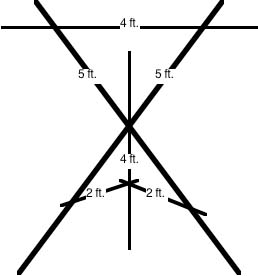
To start, you’ll need six good, straight sticks as follows:

  • two 2-foot x 3/4 to 1-inch for the leg braces
  • two 4-foot x 3/4 to 1-inch for the back leg and crossbar
  • two 5-foot x 3/4 to 1-inch for the front legs

For the lashings, you’ll need:

  • one 10-foot x 1/4-inch manila rope for the tripod lashing
  • six 6-foot x 1/4-inch manila ropes for the square lashings

NOTE: This and several types of camp gadgets can be happily lashed together simply using binder twine!

You’ll also need

  • bar of soap in a sock with a 3-foot cord
  • small to medium-sized towel with a 3-foot cord
  • No. 10 can with a bail or 4-quart cooking pot with a bail.

Here’s the assembly procedure:

The design for making a wash station.
Position of the sticks.

Make the tripod. Using the 10-foot rope, lash the two 5-foot sticks and one 4-foot stick together with a tight tripod lashing. The 4-foot stick should be in the middle. Make sure the “butt” ends of all three these sticks are even. Separate the legs and set the tripod up. The success of this project relies on a well-tied, tight tripod lashing.

Lash on the braces. Using four tight square lashings, with the 6-foot ropes lash one end of the 2-foot sticks to the 5-foot legs and the other end of the 2-foot sticks to the four-foot leg.

Lash on the crossbar. Using two more square lashings, tightly lash the other 4-foot stick to the top extended sections of the two 5-foot sticks to make a cross bar for the towel and soap-in-a-sock.

Add the soap, water, and towel. Tie the end of one 3-foot cord to the soap-in-a-sock and the end of the other 3-foot cord to the towel, and hang them on either side of the 4-foot crossbar.

Washing his hands before breakfast on a cold, winter camping trip.

Hang the can filled with water to the end of the 4-foot stick extending from the front of the tripod.

During the camping trip, change the water as necessary. See that the soap-in-a-sock is not left in the can after use as it will melt.

One of the beauties of using metal containers is that in cold weather, the can of water can be heated in the fire.

Camp Clothing Drying Rack

Small Clothes Rack

Designed very closely along the lines of the Simple Camp Table, this is an easy solution to how to dry wet clothing and towels at a long-term camp.

  • It takes up less space while drying more wet things.
  • It eliminates the clutter of clothing and towels haphazardly strewn around on tables, tree branches, tent platforms, or overcrowded on a disorganized array of drooping clothes lines.
  • It can be set up in a location where there is the most sunshine.
  • It’s especially useful when camping in an open area with few trees.

A large camp clothing drying rack can be built using four 6-foot x 2-inch spars, or a smaller one with four 5-foot Scout staves.

Attaching the long line to the rack ends

Build the framework. For each side of the rack, lash two poles with a tight shear lashing. Make sure the distance where they intersect at the top is the same for each pole.

If you’re making a larger rack, strengthen the sides by connecting the poles with a 4 or 5-foot cross brace, lashed on with tight square lashings. This will form an A-frame for each side. (For a smaller rack, all you’ll need are the Shear Lashed staves forming two inverted ‘Vs’.)

Set up the supporting line. What holds up the sides of the rack and serves as the highest drying line is a long rope. A 50-foot x 1/4-inch manila rope works great, but most any long cord will be fine. Drive in two narrow pioneering stakes, one for each side, extending about ten feet beyond the length of the drying rack. The larger the rack, the longer this length can be.

Attach the long rope to each rack side with a an Open-Ended Clove Hitch around the top of one pole, right where they intersect. The distance between each side is the length of the drying rack where wet clothes and towels will be hung.

Larger Drying Rack

Raise the rack. After the clove hitches are in place, lift up one rack side and secure the end of the long rope to the corresponding stake with a taut-line hitch or rope tackle. Repeat this process with the other rack side. Tightening the ropes at the stakes is what keeps the drying rack firmly in place.

Add some lines. Adding more lines increases the capacity of the rack to dry more and more wet clothing and towels. Tie additional ropes or cords to the rack sides at lower heights, attaching one end around the pole with a clove hitch or two half hitches, and the other at the other pole with a taut-line hitch. To increase the rack’s stability, you can heel in the butt ends of the rack sides an inch or two into the ground. This will keep them from shifting when the additional lines are made taut.

NOTE: For a very sturdy drying rack, replace the single stake at each end with a 1-1 anchor, and then, instead of using shorter lines secured only between the rack sides, use long ropes or cords, attaching them with a clove hitch at the poles, and then around each 1-1 anchor with a tight taut-line hitch or rope tackle.  If you’re using manila (which has a low stretch factor) as your long rope, and you’re getting a decent strain on the line, there’s no reason you can’t just secure the rack to the stakes using roundturns with two half hitches.

A Better Clothes Drying Rack