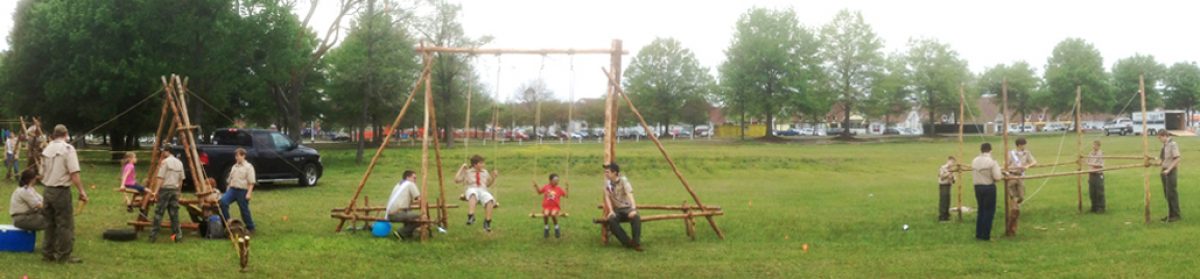
“Pioneering is practical and character building: the two essential ingredients of any program material for Scouts.” (Lord Baden-Powell)
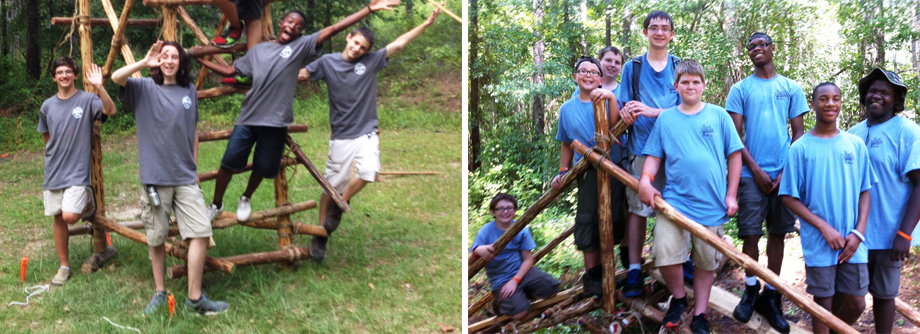
Pioneering Merit Badge, which as we all know used to be required for Eagle, should give Scouts a taste of pioneering! Of course they should be taught about safety and gain some general knowledge, but much more importantly, they should be introduced to the Scouting traditions and the fun that this activity embodies. They should DO pioneering!
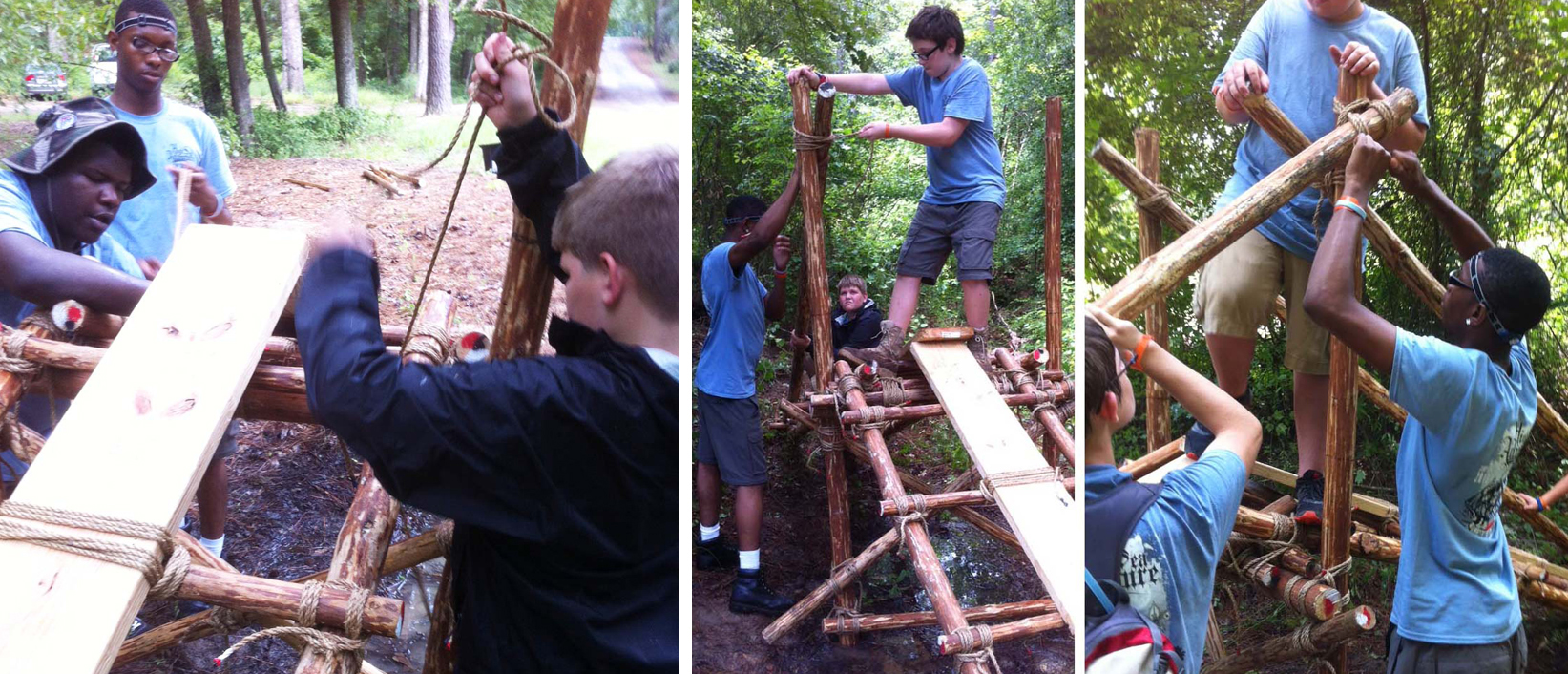
Taking part in building pioneering projects contributes to the development of self-esteem and provides a sense of accomplishment. It necessitates working hard and working together towards a common goal. Besides being really cool and impressing people in and out of Scouting, building a real pioneering structure requires the mastery of a set of useful Scout skills that can be applied over a lifetime of outdoor activities—activities for both work and recreation.
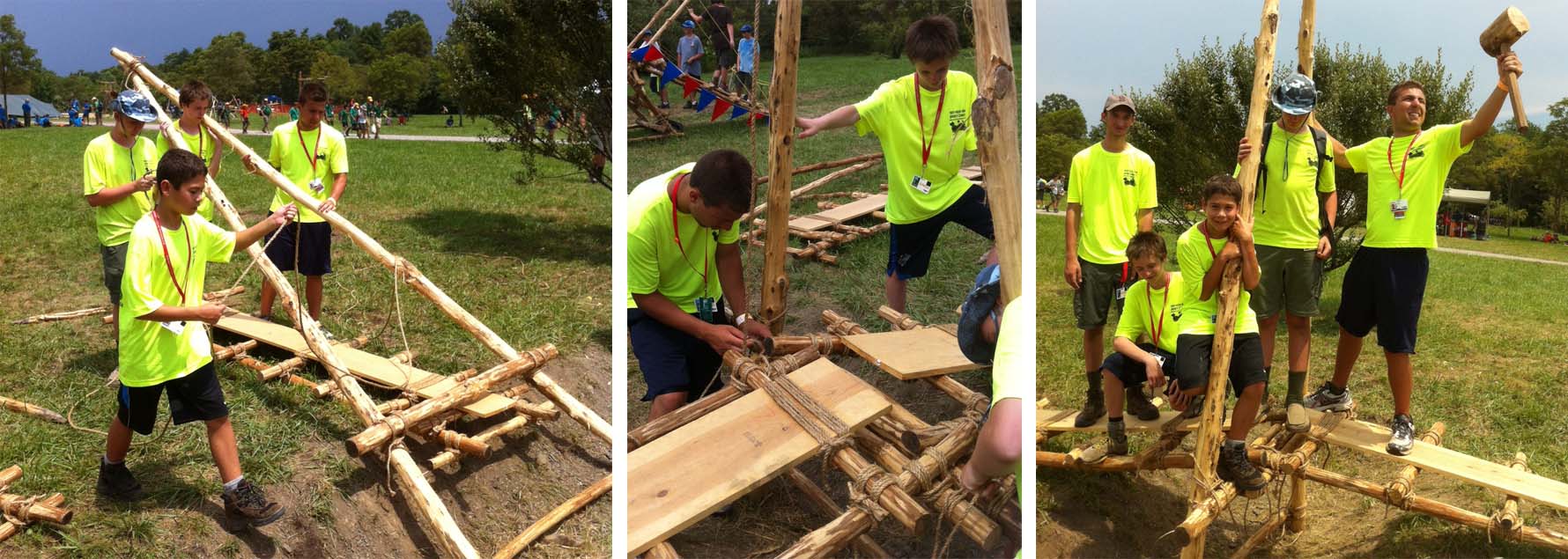
Pioneering Merit Badge should be presented as a series of planned challenges and opportunities leading up to memorable experiences that are rewarding and unique. The recipients of this merit badge should be inspired to share their acquired skills and the fun they had with other Scouts in their unit.
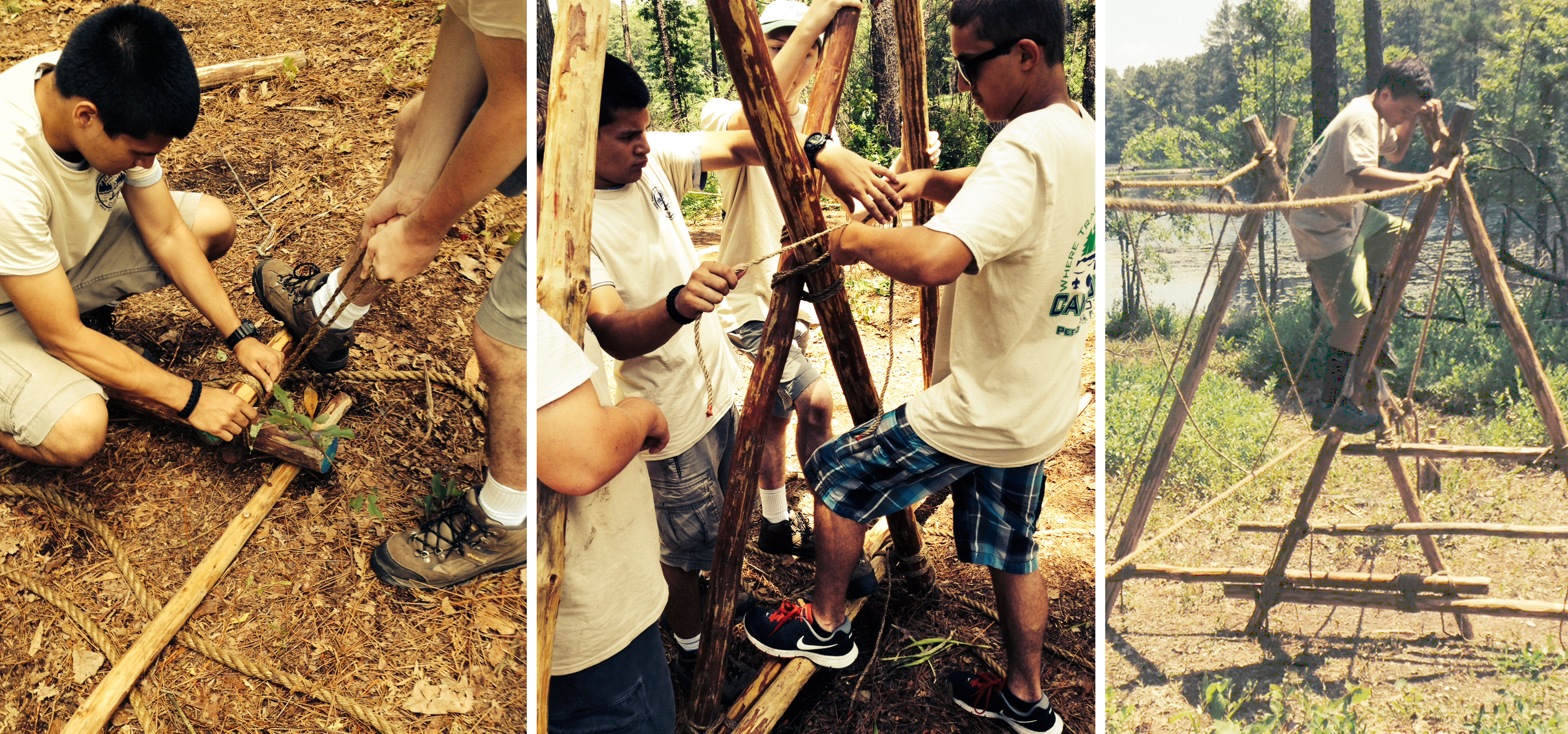
As Gilwell Park Camp Chief, John Thurmann stated, “To me, the over-riding reason for presenting Pioneering is that boys like it. There are few activities which, properly presented, have a greater appeal to the Scout than Pioneering and ever since the introduction of Wood Badge training, Pioneering has been given a full share in the program of Scouters’ training. In the summer months when Scouters at Gilwell are building bridges, towers, and rafts, and boys are in camp, it has been all too common to hear from the boys such remarks as, ‘I wish we did that in our Troop’ or ‘We never do anything like that’.”

But there are reasons for Pioneering other than the fact that Scouts like doing it. B.-P. wrote: “I am inclined to suggest to Scouters that in addition to the technical details of knotting, lashing, and anchorages, there is an educative value in Pioneering since it gives elementary training in stresses, mensuration, etc., and it also develops initiative and resourcefulness to use local material. Additionally, it gives practice in team work and discipline.” In other words, (“Pioneering is practical and character building: the two essential ingredients of any program material for Scouts.”)
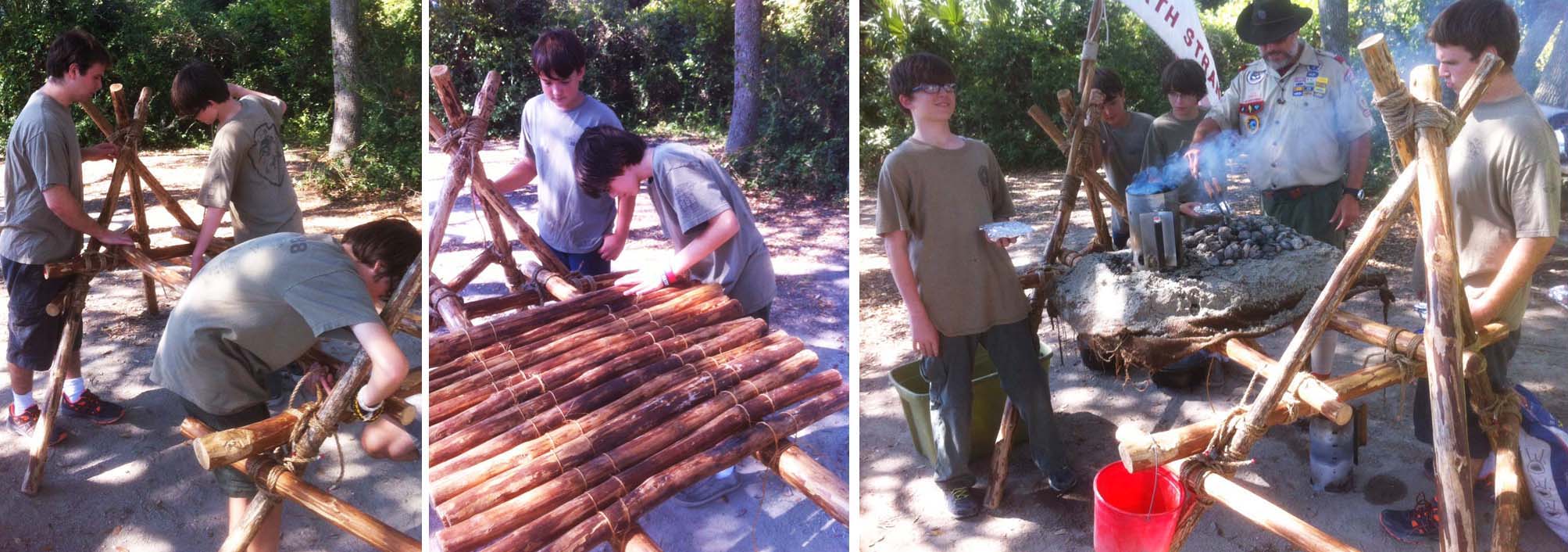
 SCOUT PIONEERING