Rope for Pioneering and Camp Use

New ropes need to be stretched, before they are fit for use. One Scout only can do it! After the first stretch, the slack should be taken up and the process repeated once only.
From: “Scout Pioneering” Construction and Care of Rope by John Sweet

The following text is by Adolph E. Peschke as presented in the 1998 printing of the 1993 edition of the Pioneering Merit Badge Pamphlet:

KEY FACTORS TO CONSIDER

There are several important factors to consider when selecting the kind and size of rope to use in pioneering and camping activities. Three of the most important factors to consider are the strength in both the working load and breaking point of the rope, the stretch factor of the rope, and how easily the rope handles.

Some other considerations are the rope’s resistance to mildew, its ability to stand up to repeated wetting and drying, and whether or not it retains kinks from knots after having been under a hard strain, making it difficult to use a second time.

Cost is always an important factor to consider when equipping a pioneering kit. Factors that affect cost are quality, grade, packaged cut length, and source of supply. Scout units can usually buy rope from wholesale suppliers if it’s purchased in standard package lengths. Manila rope in 1/4″ diameter comes in a standard 1200′ coil, while larger diameters come in 600′ coils. Most other types of rope come in 600′ spools as a standard package. Shorter lengths are available from retail suppliers.

ADDITIONAL FACTORS

  • Since all rope types and sizes come in different grades of quality, which can relate to the strength, it is best to refer to the manufacturer’s specifications that appear on the package. It is a good idea to keep the package for future reference.
  • Braided rope is about 10 percent stronger than twisted rope of the same diameter and type.
  • Even the best knots can reduce rope strength 20 percent.
  • Overhand knots reduce strength 50 percent.
  • Polypropylene ropes lose strength when exposed to sunlight for extended periods of time.
  • Nylon rope is 20 percent elastic and stretches to add 20 percent to its original length.
  • The working load strength of most types of rope is up to 20 percent of its breaking strength. If available, go to the manufacturer’s specifications to determine the safe working load.
  • Good care and storage will prolong useful life.
  • Frequent inspections and discarding questionable rope is essential to ensure safe working equipment.

TYPES OF ROPE

Manila. Pure manila rope is by far the best all-around rope. It is easy to handle, has good strength-to-size ratio, and does not have an objectionable stretch factor. It handles well in three important pioneering areas: knot tying, lashing, and in using a block and tackle.

Manila rope can be spliced easily and withstands repeated wetting and drying cycles, making it suitable for boat and marine use, as well as many camping and pioneering applications. Manila rope should provide the bulk of the rope needed for your troop’s pioneering kit. (Its cost is mid-range.) Properly cared for it will give good service for quite a few years.

Polypropylene. Rope made of this man-made plastic fiber should be considered for pioneering activities because it is lightweight and its strength-to-size ratio is good. Size for size it is twice as strong as manila rope, but has a little higher stretch factor. Its strength makes it suitable for anchor strops and for any application involving heavy strain.

Polypropylene does stretch under a hard pull, but should not pose a problem if taken into consideration beforehand. A hard pull will result in kinking with some knots. Polypropylene resists mildew and will float, making it a good rope for waterfront activities and in wet conditions.

It is easy to splice in a twisted three-strand form. Because it is somewhat slippery, four tucks should be made instead of the usual three tucks. Cut ends should be both melted back and whipped with a good flax cord.

A disadvantage of polypropylene is that long exposure to sunlight has a weakening effect on the fibers. But, all things considered it is is worth including in your pioneering supplies.

Nylon. Nylon is commonly available in both braided nylon and twisted forms. Both forms come in a loose braid or twist and in a hard solid braid or twist. The loose braid or twist is not as strong and its fibers can easily get caught on bark, which can be bothersome. The hard twist or braid costs more, but is well worth its price.

Nylon rope is strong for its size, It is two an a half times stronger than the same size manila rope but loses some of its strength when wet. The three-strand twisted form of nylon can be spliced, but, as with polypropylene rope, it’s best to make four tucks instead of the usual three tucks and the cut ends should be both melted back and whipped to prevent raveling.

The most prevalent disadvantage of nylon rope is that it has a 20 percent stretch factor. But in cases where the stretch factor can be taken up with adjustment to the strain on the line, its strength can be an advantage. Nylon rope also has a tendency to slip when a hard pull is put on some knots. Because of these two factors, it is almost useless as a lashing rope.

All things considered, there is a place for both twisted and braided nylon rope in the solid, not loose, form.

Polyester. This man-made fiber rope is usually seen in the braided form. It handles well, is strong, and its stretch factor is less than nylon. It costs more than manila or nylon, but some sizes and lengths could be used in pioneering activities on a selected basis. A 6′ length of 1/4″-diameter polyester rope makes an excellent rope for practicing knot tying and pioneering games.

Polyethylene. This is the cheapest of man-made fiber ropes. It is most often seen in braided form and has a distinctive shine. Don’t let the low cost lure you into buying any quantity of polyethylene for pioneering or camp use. It is not suited for either knot tying or lashing because it holds kinks after being under a strain. (Since it floats it does have some very limited use at he waterfront for ski ropes or other waterfront activities).

Sisal. Sisal rope has much the same appearance as manila rope, but it is quite inferior in strength and does not handle well when used for lashing or knot tying. When sisal rope that is tied into a knot or lashing gets wet and then dries, it becomes useless because of the kinks that remain.

Even though it costs less. it is not cost effective because it breaks down quickly during use and when it gets wet. It might offer limited use in cases where expendable, but overall the cost is high when compared to other types of rope that can be used again and again.

Cotton. Cotton rope in both twisted and braided forms is outclassed in strength by other types and today there is little use for it in pioneering and camping.

Binder twine. Binder twine is made from loosely twisted jute fibers that are treated with oil during manufacturing. Its principle use today is for tying up bales of hay as the baling machine compresses the hay.

Binder twine is readily available in varying quantities at hardware and farm supply stores. Its low cost makes it a throwaway item after use. But don’t be too quick to toss it in the trash—a balled up handful of discarded twine makes a very good fire starter in camp.

Here are some uses for binder twine:

  • When pioneering projects or camp gadgets call for the use of saplings less than 2″ in diameter, binder twine can be used for lashing. (Do not use binder twine as a replacement for 1/4″ rope in general pioneering use or lashings.)
  • Use binder twine to make a simple strop lashing with six or eight wraps and a square knot.
  • Use binder twine to hold the cross spars of a light bridge walkway in place.
  • Two strands of binder twine quickly twisted together will equal a light cord. Use binder twine for the back stays of anchor stakes.
  • Use binder twine to outline the ax yard for safety.
  • Use binder twine for the construction of pioneering camp gadgets.
Get Pure Manila Rope and Don’t Be Fooled!

The Older Pioneering Merit Badge Pamphlet

Link to: Older Pamphlet Info
The Older Edition by Pioneering Legend, Adolph Peschke

Those of us who have experience providing a program of Scout Pioneering, and who are familiar with the edition of the Pioneering Merit Badge Pamphlet written by the legendary Adolph Peschke, will have no difficulty relating to why there are repeated references and allusions to the 1993, 1998 edition in this website, with its attention to detail, and  when it comes to providing explanations that are helpful and comprehensive.

In the interest of accuracy, the recent 2006 edition has undergone many necessary revisions.  There’s a website corresponding to the newest edition, and the post: What Pioneering Merit Badge SHOULD Be! is written from the author’s personal perspective.

In the interest of providing more and more Scouts with worthwhile pioneering experiences, and as an aid to those Scouters who are serious in making these experiences available to our youth, this website features specific text and drawings from Adolph Peschke’s  edition.

What follows are links to posts containing the text and many of the drawings from the 1993, 1998 pamphlet:

INTRODUCTION TO PIONEERING

SAFE PIONEERING

ROPE-TOSS-LOG-LIFT CHALLENGE

ROPE FOR PIONEERING AND CAMP USE

KNOT-TYING TERMINOLOGY

TIMBER HITCH

ROUNDTURN WITH TWO HALF HITCHES

ROLLING HITCH

BUTTERFLY KNOT

CARRICK BEND

CONSTRICTOR KNOT

WATER KNOT

PIPE HITCH

PRUSIK

SPLICING ROPE

WHIPPING

ANCHORING PIONEERING PROJECTS

ROPE TACKLE

LASHING

JAPANESE MARK II SQUARE LASHING

MAKING A TRESTLE

BRIDGE WALKWAYS

PIONEERING PROJECTS

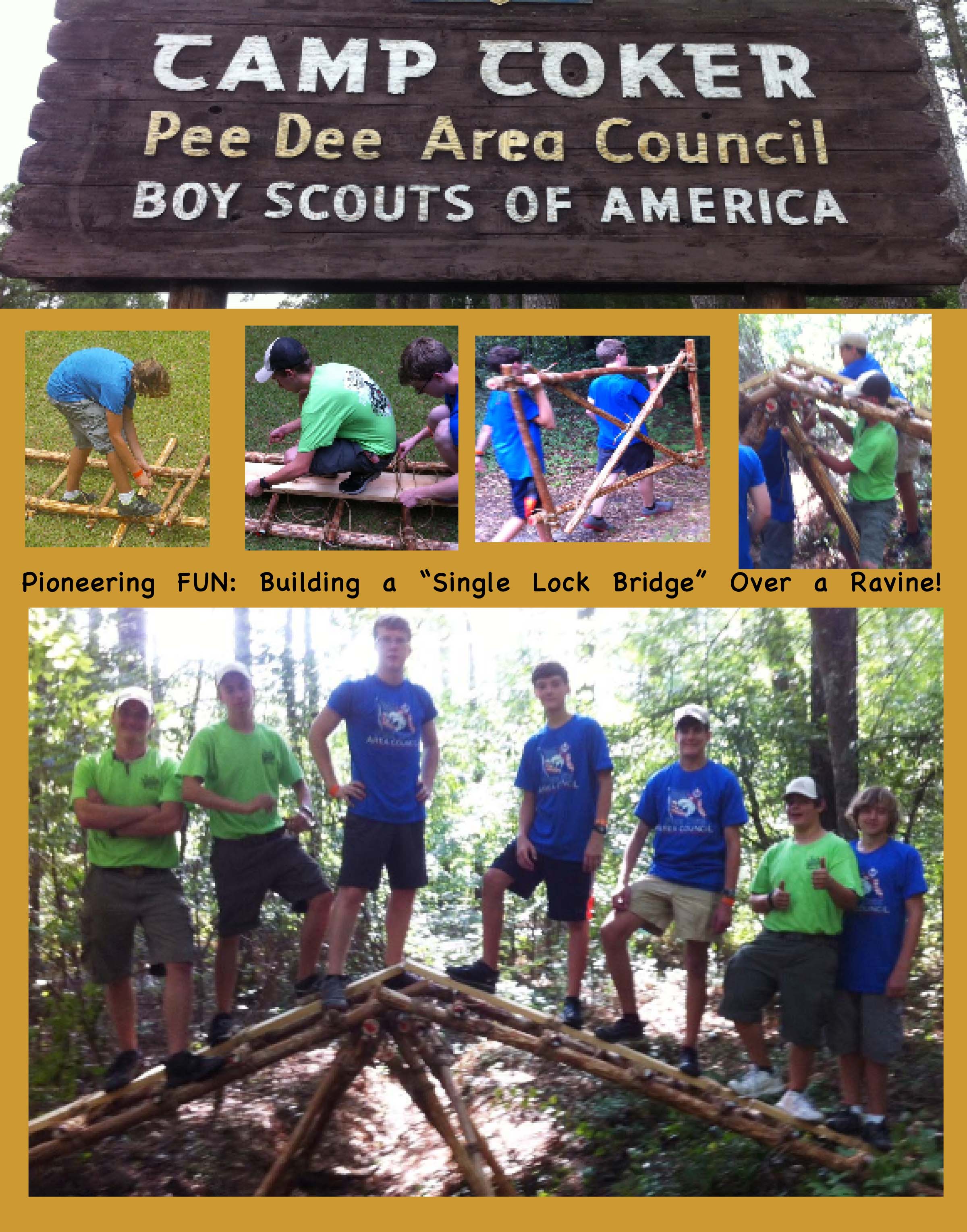
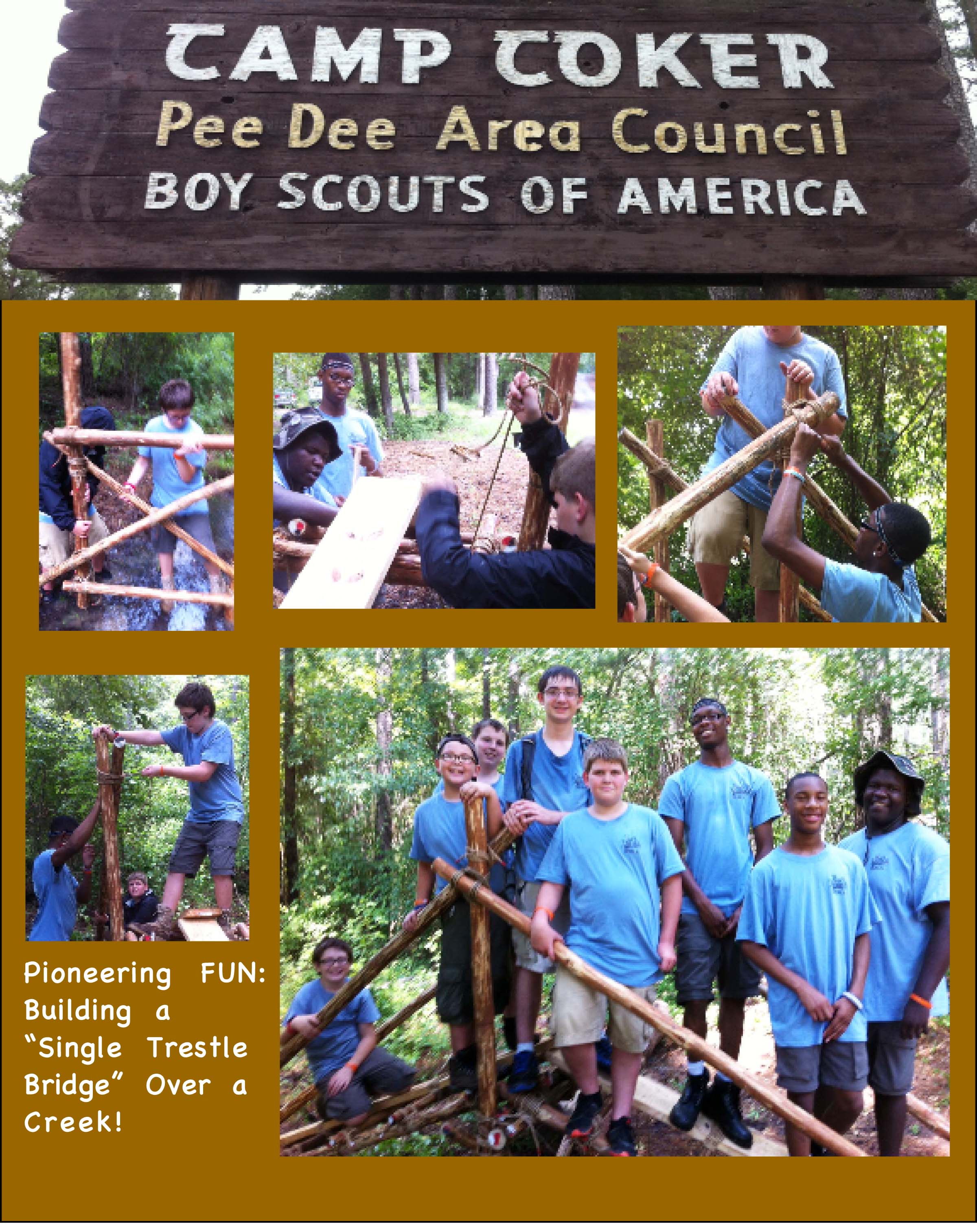
SINGLE TRESTLE BRIDGE

SINGLE LOCK BRIDGE

SINGLE A-FRAME BRIDGE

14′ DOUBLE LADDER SIGNAL TOWER

DOUBLE A-FRAME MONKEY BRIDGE

PIONEERING KIT

Note: This website’s purpose is to share the joys and benefits of Pioneering and is not intended to serve as a direct aid in earning the Pioneering Merit Badge. But, for those interested, here is a link to the current requirements for the badge.


Pioneering Projects

Author: Adolph PeschkeThe following text is by Adolph E. Peschke as presented in the 1998 printing of the 1993 edition of the Pioneering Merit Badge Pamphlet:

PIONEERING PROJECTS

The craft of building with ropes and spars continues in remote areas throughout the world today. Scouts can apply the skills of knot tying and lashing to build pioneering structures that are needed to make living in camp a little more comfortable. Whether you build a simple gadget, or a bridge to provide a shortcut to the swimming pool, pioneering can be rewarding and fun.

The pioneering projects shown here, along with the suggested sizes and lengths of spars, are intended for building “boy-size” structures; that is, projects that can be built by boys of Boy Scout age.

You don’t have to build a huge tower to learn the skills and enjoy the fun of pioneering. These projects are designed so that you can build them in a few hours with a minimum of equipment and supplies. Yet, you will still learn how the basic pioneering skills of knot tying and lashing must work together with the design of a structure to produce a sound, safe pioneering project.

Building these projects will be much easier if you put together a pioneering kit first. The success of any project is directly related to the planning and preparation you put into the project from the beginning.

Here are some things to take into consideration before you build a pioneering project:

  • Decide on the type of project you want to build. Take into consideration the equipment, the number of people needed, and the time required to build it.
  • Check the site where the project is going to be built. Collect all the information that you will need when building the project. For example, are there any natural anchors for guylines? How wide and deep is the creek where a bridge is to be built?
  • Make a rough sketch of the project or work from an approved plan drawing. Along with the sketch, have a list of equipment that includes all the equipment you’ll need. You don’t want to start a project and later learn you need something you don’t have.
  • Select the necessary spars you’ll need for the project, making sure that you have enough spars with the proper butt diameter and length to build a safe project.
  • Determine the size and lengths of all the ropes needed for lashings, guylines, etc.
  • Before you start building, determine if the project can be divided into subassemblies for ease of lashing and erecting. Assign crew members and a crew leader to each of the sub assemblies, based on skill level and experience.
  • Go over the plans with all the crew members. Assign only one person to give signals when raising all or part of the structure.
  • As you’re building the project, frequently check the progress to make sure it is being done with safety in mind.

A word about the appearance of the project: Part of the skill in building with ropes and spars is to select the spars that are best suited to the structure. In some situations, the supply of spars might be limited.

It is not necessary for your project to be picture perfect, but rather that it is structurally sound. If one or two spars are a bit longer than required, that’s fine as long as the lashings are in the proper location for strength and the diameter of the spars will carry the load applied.

Try to avoid cutting off the ends of spars and ropes just to fit a certain project, especially if you’re working with spars from a pioneering kit. The next crew might want to build a different project and could use the spars and ropes at the original lengths.

The spars used for a pioneering project should have the bark removed for two reasons. Bark beetles and other boring insects can seriously decrease a spar’s strength, and inspection is easier with the bark removed. Also, if the project racks, the bark under the lashing can be loosened, which in turn makes the lashing loose and adds to the possibility of making the whole project wobbly and unsafe. (And, bark under a lashing can be rubbed off in the process of setting up a project.)

Note: Any pioneering structure that is to be a permanent camp improvement should not be left with only lashings. It needs to be bolted together for safety and maintenance.

Pioneering Legend: Adolph Peschke

Soon after the 1993 edition of the Pioneering Merit Badge Pamphlet was published, I ventured to contact its author with some questions. Happily, I was able to reach him at his home, and was treated to enthusiastic explanations regarding the projects our troop wanted to build. Mr. Peschke was always very generous with his time and had so much information to share, it always felt I was being given dollar answers for my little 10¢ questions.

Pioneering Legend, Adolph Peschke

The following text has been extracted from the Acknowledgments page of the Pioneering Merit Badge Pamphlet he authored: “Mr. Peschke has more than sixty years’ tenure in the St. Louis Area Council, and is a Wood Badge course director for more than 20 course staff experiences. He has designed thirty original “boy-size” pioneering projects. As a design engineer for five national Scout jamborees, he was responsible for the theme development, site layout, and staff training for the Action Center’s pioneering areas. He also developed the pioneering kit with its color-coded system to identify rope and spar lengths for building pioneering projects, and he has contributed to the BSA Fieldbook, Program Helps, and Boys’ Life and Scouting Magazines.”

Adolph Peschke, a most worthy recipient of the Boy Scouts of America’s Silver Antelope Award, passed away on November 23, 2012. He was 98. I had just spoken with him about two weeks before, during which time he was, as always, enthusiastic and emphatically informative. He will be missed, but his legacy will live on. Thank you Adolph! You have served, and continue to serve, as a most-helpful resource of valuable insight and information.

Adolph Peschke’s Pioneering Guidelines

Adolph Peschke’s Introduction to Pioneering

Pioneering With Laminated Spars by Adolph E. Peschke: How to Build a Pioneering Starter Kit with Laminated Spars for a Scout Troop to Build “Boy-Sized” Projects.

Adolph Peschke in Wikipedia

Pioneering With Laminated Spars

The following text is by Pioneering Legend, Adolph Peschke, author of the renowned 1993 edition of the Boy Scouts of America’s Pioneering Merit Badge Pamphlet, from his treatise entitled “Pioneering With Laminated Spars.” Some additions have been included in this post, for the purpose of practical elaboration.

Suggestion: Prior to using them to build a project, to eliminate the lashings from slipping on the smooth surfaces of the Laminated Spars, wrap six inches of friction tape tightly around the areas where the spars will intersect one another .

LaminatedSparsTitle

LSMB1
Building an A-frame using Laminated Spars

Just what are laminated spars? They are similar in size and length to the natural tree spars that have been used for many years bt Scouts in the construction of Pioneering structures i.e.: bridges, towers, and in other camping projects.

This kit of Laminated Spars are fabricated using pieces made from standard lumberyard shapes. Here, two or more wood shapes are glued and nailed together to obtain a strong cross-section and length of the finished spar needed in building structures using ropes and spars. This method of gluing and nailing pieces of wood together has long been used by wood workers to gain the strength that a single piece of wood does not provide.

Lashing together 2 A-frames made with Laminated Spars

Important to Scouts is the fact that the same knots and lashings used with natural spars in building bridges, towers, etc. can be used with these Laminated Spars.

Because natural spars have become harder for Scout troops to obtain due to changes in conservation practices and the fact that suitable species of trees that provide the best spars are just not available for harvest in many areas of the country, Laminated Spars are a means for the Scout troop to have its own “kit” for a full program of “boy sized” Pioneering for teaching – learning – advancement – or just fun and action projects.

T h e  T r o o p  K i t

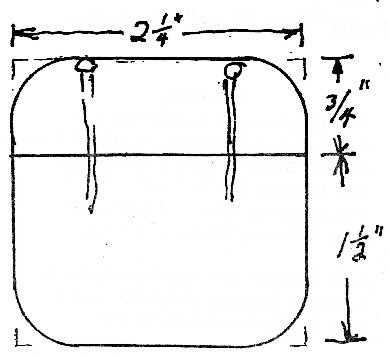
  • 4 ea.   Trestle Legs, 2-1/4″ x 2-1/4″ x 6′
  • 4 ea.    Ledgers Upper/Lower, 2-1/4″ x 2-1/4″ x 4′
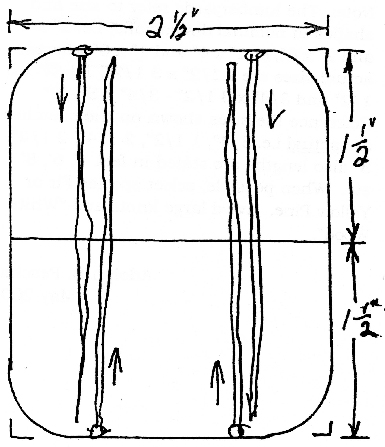
  • 1 ea.     Transom, 2-1/2″ x 3″ x 4′
  • 4 ea.    “X” Braces, 1-1/2″ x 2- 1/4″ x 6′
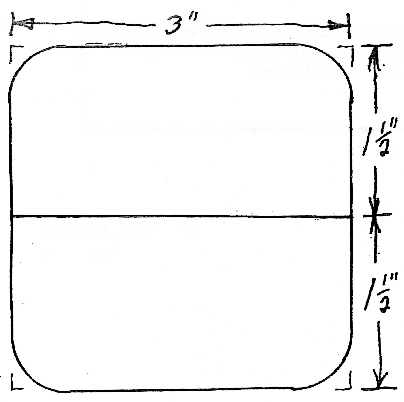
  • 12 ea.  Walkway Cross Spars, 1-1/2″ x 3″ x 3′
  • 4 ea.    Walkway Cross Spars, 1-1/2″ x 3″ x 4′ (a little longer than specified but more thrifty)
  • 4 ea.    Walkway Laterals, 2-1/2″ x 3″ x 10′
  • 2 ea.    Walkway Planks, 2″ x 8″ x 8′

Refer to the Pioneering Merit Badge Pamphlet for knots, lashings, and building instructions for the Single Lock Bridge.

Materials: It is not necessary to buy choice lumber. A good construction grade should do, if you can buy from a lumberyard that lets you pick and select what you buy.

Note: The lumberyards refer to size and shapes in nominal dimensions, i.e.

  • 2″ x 4″ actually is: 1-1/2″ x 3-1/2″
  • 2″ x 6″ actually is: 1-1/2″ x 5-1/2″
  • 1″ x 4″ actually is: 3/4″ x 3-1/2″
  • 1″ x 6″ actually is: 3/4″ x 5-1/2″

Reference the sizes shown on the sketches are actual i.e. 3/4″, 1 and 1/2″, 2 and 1/4″, 2 and 1/2″ , 3″. Also lengths are stated in feet: 4′, 6′, 8′, etc. When possible, select species Fir or Yellow Pine. Avoid large knots and “White Wood.”

Fabrication of Laminated Spars – All work should be done or supervised by adult leaders and/or skilled craftsmen.

LS1TRESTLE LEGS & LEDGERS: (as per The Troop Kit)

Materials needed: one 1 x 6 x 4-foot.,  one 2 x 6 x 4-foot, one 1 x 6 x 6-foot, one 2 x 6 x 6-foot boards

These lumberyard shapes may be bought in 8 and 12-foot. lengths.

Rip lumber to 2-1/4-inch strips and cut to 4  and 6-foot lengths.

Spread glue evenly on both pieces and nail with 6D Hot Dip Galvanized Nails along both sides with 10-inch staggered spacing. Leave clearance for 1/2-inch Round Over Router Bit. Paint the ends of the 4′ spars white, and the 6′ spars red.

LS2THE TRANSOM SPAR: The Transom Spar is a stout spar used on many different bridges to support the walkways where they meet at the center of the bridge. When the walkways are lashed to it, it makes a continuous unit.

Material needed: The Transom Spar can be made from one 2 x 4 x 8-foot stock. Rip the lumber to 2-1/2 inches and cut it into two 4-foot lengths.

Spread glue evenly on two sides and nail using 10D Hot DIpped Galvanized Nails. Drive nails from both sides at an angle (to prevent penetrating the opposite side). Router 1/2-inch round over all four edges. Paint ends white.

LS3TRESTLE “X” BRACES (as per The Troop Kit)

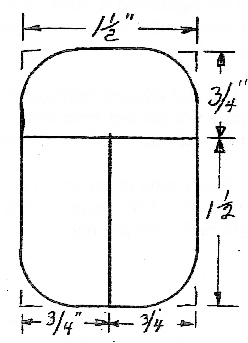
Materials needed: Four 1 x 6 x 6-foot boards. Rip each piece into three 1-1/2-inch strips.

Note: Once you have ripped the three pieces into into 3/4 x 1-1/2-inch strips, it is easier to run the 1/2-inch round over the edges.  See the sketch BEFORE routing. One piece gets 2 edges rounded, and the other two get one edge only. Becasue the strips are narrow, it is best to route round overs before nailing.

Use 1 and 1/4-inch Ring Shank Nails.

The finished spar is 1-1/2″ x 2 -1/4″ x 6 feet.

Paint the ends red.

WALKWAY CROSS SPARS (as per The Troop Kit)

Materials: Six 1 x 6 x 6-foot boards and two 1 x 6 x 8-foot boards

These spars have the same cross section as the “X” Braces above. Twelve of them are made from 6-foot sections and then cut into 3-foot lengths, and four of them are made from 8-foot sections and cut into 4-foot lengths.

LS4WALKWAY LATERAL SPARS (as per The Troop Kit)

Materials: eight 2 x 4 x 10-foot boards.

Rip these to 3 inches. It will take two to make each 3-inch x 3-inch x 10-foot spar. Round over with 1/2-inch bit on two edges only. Spread glue and nail from both sides using 10D Hot Dipped Galvanized Nails.

Note: Drive nails on an angle to prevent the tip from penetrating the far side.

Paint ends black.

Tools: The most practical method to reduce sizes of lumberyard shapes to the dimensions called for on the sketches is to use a circular table saw for ripping and an electric router to make the round-over cuts on the edges.

Caution: All power tools must be operated only by skilled adults, in accordance with the manufacturers specifications. Work in a safe place and follow safety rules.

Older Scouts may help with gluing and nailing.

A few “C” clamps will be needed to keep the pieces in line while being nailed.

Double A-Frane Monkey Bridge built with Laminated Spars
Double A-Frame Monkey Bridge built with Laminated Spars

Glue: Use Tightbond II (Blue Label) and spread with a roller to get a complete and even spread.

Nails: Use Hot Topped Galvanized Nails. Your spars will get wet from time to time so rust-proof nails are the best choice.

Paint: Small cans of brush on are best and much cheaper. A 4-inch gauge marker for the ends will make the job neater.

Note: Use the Boy Scouts of America Pioneering Merit Badge Pamphlet for instructions in knot tying and lashing. With this Troop Kit of Laminated Spars, you should be able to build the Single Lock Bridge.

Adolph E. Peschke

May, 2001

Some more notes: It will definitely pay off to wrap the spars with friction tape at the points where the lashings will be tied! (Same goes for slick, green bamboo.) In lieu of tape, use a bastard cut wood rasp file and form a slight roughed out indentation at the places where lashings will be applied, to eliminate sliding on the slick surface of the spars.

The colors for coding the spars at the tips are suggestions and bot universal. The colors chosen can be in accordance with those used by your unit, district, or council.

Prepare eight 2-1/2″ x 3″ x 8′ spars and four 2-1/4″ x 2-1/4″ x 6′ spars and you have the poles required for a Double A-Frame Monkey Bridge.

Favorite Pioneering Knots: Rolling Hitch

VIEW VIDEO: How to Tie a Rolling Hitch

A Very Useful Hitch!

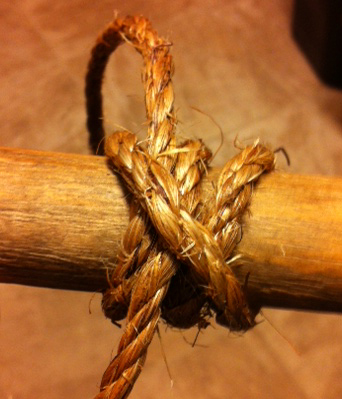
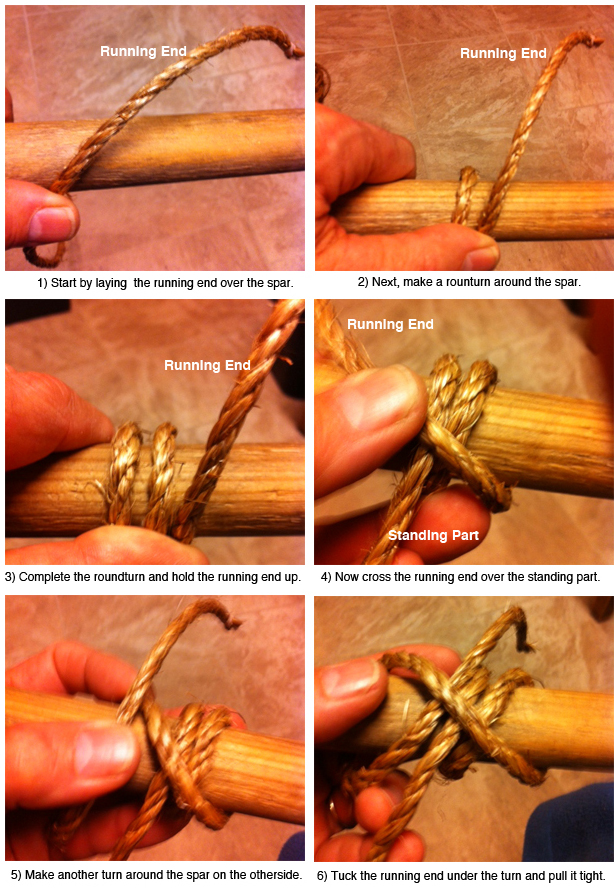
John Thurman lists the rolling hitch (also known as a Magnus Hitch) as one of the essential pioneering knots. It’s similar to a clove hitch, but it’s a lot less likely to slip under a sideways pull. When securing a guyline to a horizontal spar, the rolling hitch can be used in lieu of a roundturn with two half hitches. It is also useful to attach a rope to another rope that has strain on it. Make sure that the direction of the pull exerted on the rolling hitch is against the double strand.

Link to: Older Pamphlet Info.Here’s how Adolph Peschke describes the rolling hitch in the ’93 edition of the Pioneering Merit Badge Pamphlet:

As you become more involved in pioneering activities, you will find that there are many uses for the rolling hitch. After the roundturn is made, it supplies enough grip for you to complete the knot with ease, even when the line is under strain. Further adjustment can be made without completely untying the knot, by loosening the knot slightly, pulling the rope tight, and tightening the knot again.

When the rolling hitch is tied to a spar, pull can be exerted either perpendicular to or along the length of the spar. After exerting heavy pressure, it will untie easily. When you need extra gripping power, just add extra turns. It works well with slippery or wet rope.

Pioneering Uses

When you want to tie a rope to a stake or a spar, the Rolling Hitch can be loosened easily to take up slack, and then retightened.

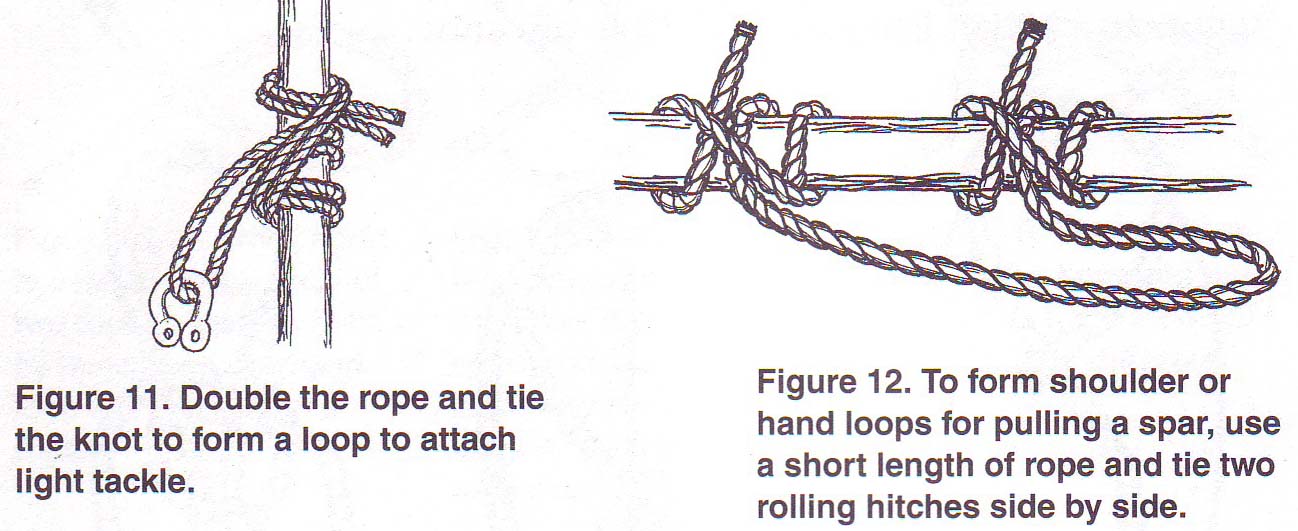
To attach a light tackle, double the rope over to form a bight, and tie a Rolling Hitch with a loop for the tackle (see figure 11).

To form a hand or shoulder loop to pull a spar, tie two rolling hitches, one at each end of a short rope (see figure 12).

From Older Merit Badge Pamphlet
The more you use it, THE MORE YOU'LL USE IT!
The more you use it, THE MORE YOU’LL USE IT!

Double Floor Lashing

VIEW VIDEO: How to Tie a Double Floor Lashing


View the pictorial illustrations below!
Scroll down for a revealing pictorial illustration!

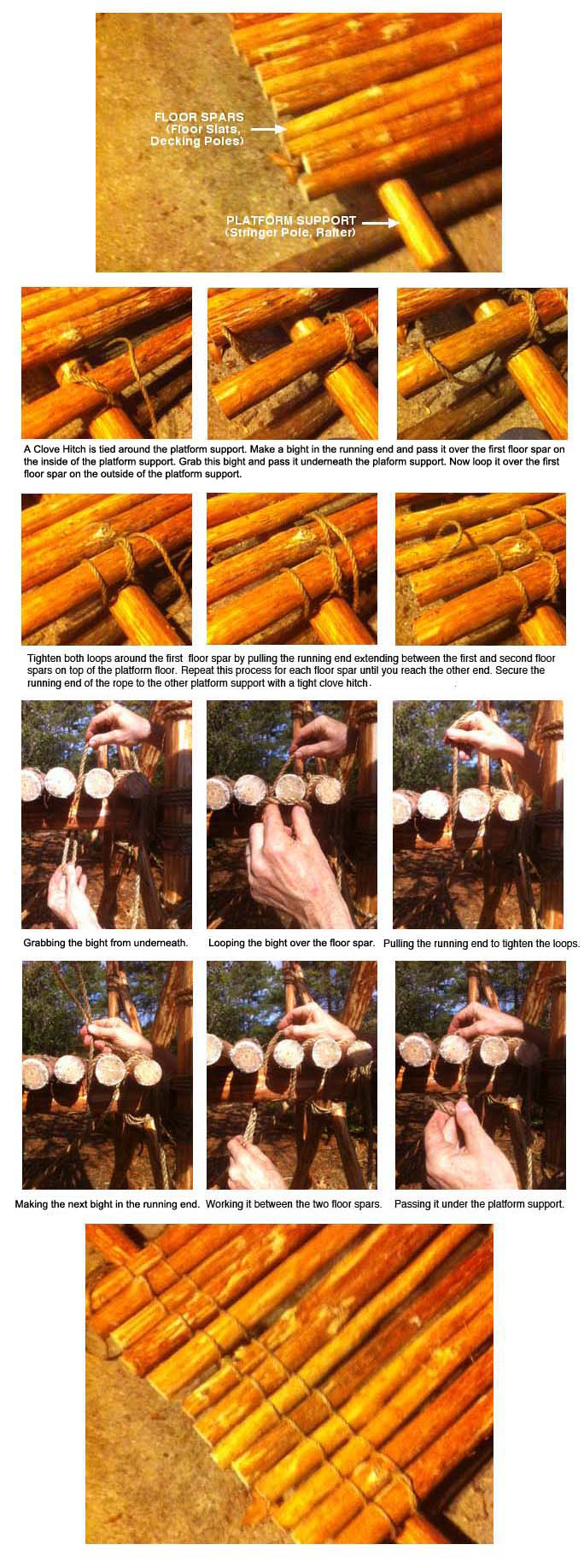
With the Double Floor Lashing, the floor spars (floor slats, decking poles) are attached (looped) in two places, on either side to each platform support (stringer pole, rafter). This means, when pulled tight, this lashing makes the platform floor, raft, deck, or walkway, more secure. View Video

  • The lashing starts with a simple clove hitch around a platform support on the inside of the first floor spar. Secure the short end of the rope by wrapping it round the running end forming a twisting pattern in the same direction as the rope’s weave.
  • Make a bight in the running end and pass it over the first floor spar on the inside of the platform support.
  • Grab this bight and pass it underneath the platform support.
  • Now loop it over the first floor spar on the outside of the platform support.
  • Tighten both loops around the first floor spar by pulling the running end extending between the first and second floor spars on top of the platform floor.
  • Repeat this process for each floor spar until you reach the other end.
  • Secure the running end of the rope to the other end of the platform support with tight half hitches.

NOTE: Throughout the whole Double Floor Lashing process, except when pulling the running end to tighten the loops around each floor spar (or securing the end of the rope to the platform support), you’re always working with a bight in the rope.

The whole process can be done simultaneously on the other platform support, or completed one support at a time.

Double Floor Lashing

Depending on the size of the platform, a good length of lashing rope is needed for this floor lashing—a 50-foot length for a platform six feet long, a 35-foot length for a four foot platform. Shorter lengths can always be tied together if you run out of running rope during the process. When building a platform that will be walked over or stood upon, use 1/4-inch manila. If you’re lashing a platform for a Chippewa Kitchen, binder twine works fine.

Filipino Diagonal Lashing

VIEW VIDEO: How to Tie a Filipino Diagonal Lashing

Notice how the lashing's other side is symmetrical with the wraps forming an X over the rear pole framed by two strands of rope on the top and bottom.
Notice how the lashing’s other side is symmetrical with the wraps forming an X over the rear pole framed by two strands of rope on the top and bottom.

In a diagonal lashing the wrapping turns cross the poles diagonally, hence its name. A diagonal lashing is used when there is a need to close a gap between two spars or when they spring apart, in other words, when we want to bind poles together where they cross each other but do not touch. This most commonly occurs when the ends of the spars are already lashed in place in a structure, as in forming the X-brace of a trestle. Both the traditional diagonal lashing and the Filipino Diagonal Lashing accomplish the task of drawing two spars together that do not touch. The traditional method uses a timber hitch to spring the spars together. The Filipino uses a lark’s head.*

Why are we so high on the Filipino Diagonal Lashing? Simple. It’s easier, much faster, and just as efficient. There are different methods to tying the Filipino Diagonal Lashing, but all have the same advantage of working both ends of the rope simultaneously. While wrapping, both ends move in exactly the same way which makes for quick work, and makes it easy to apply tight wrapping turns. Many who tie this lashing have adopted Gerald Findley’s clear-cut approach, providing welcome consistency across the board. After a little practice, tying it will become like second nature:

  • Halve the rope and place the bight formed in the middle behind an upper diagonal. Reeve the ends through the bight forming a lark’s head. (See 1. in the diagram below.)
  • Pull both ends tightly to the right, drawing the two poles together. (See 2.)
  • Begin the wraps by carrying both ends diagonally behind the poles around the opposite diagonal to the one where you started the Larks Head. Carry the ends over the front pole. At this this juncture, using both ends of the rope, you now have wrapped one complete turn. (See 3. and 4.) For added strength, you can take another turn, which would be comparable to four single wraps using the “traditional” method.
  • Whether taking two turns or one, to position the rope to wrap in the other diagonal, pass both ends behind the rear pole, pulling tightly. **  (See 5.)
  • Carry both ends in front of the poles around the other diagonal. Once again, for added strength, you can take another wrapping turn. When finished wrapping,  pass the rope tightly behind the rear pole. (See 6.)
  • To begin the frapping turns, separate the ends and carry one over and one under the front pole. (See 7.) Note: The end that is carried over the top pole will be singularly over all the wraps which is is fine.  This will position the ends to frap in opposite directions between the poles. (See 7.)
  • Take two or three tight frapping turns between the poles around the wraps. (See 8. and 9.)
  • Finish with a tight square knot. (See 10.)

This diagram illustrates only one (double) wrapping turn for each diagonal. Click on the image for a very clear, larger view.

Filipino Diagonal Lashing
CLICK ON THE ABOVE IMAGE FOR A VERY CLEAR, LARGER VIEW!

* James Keller, Director of the Pioneering Area at the 2013 National Jamboree points out, by virtue of the way it’s started, the Mark II Square Lashing can also be used to spring together two spars.

** To avoid any possible confusion, in this instance, the rear pole refers to the one positioned farther away from you, and the front pole refers to the one positioned over the rear, and nearer to you.

Why Pioneering!

John Thurman
John Thurman

Some special quotes by JOHN THURMAN, Camp Chief, Gilwell Park from 1943-1969 pertaining to pioneering in the Boy Scouts:

Because It’s FUN!

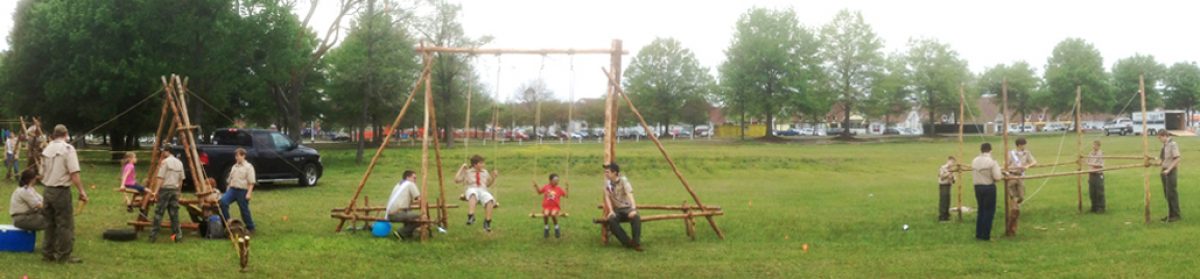
There are few activities which, properly presented, have a greater appeal to the Scout and Senior Scout than Pioneering and ever since the introduction of Wood Badge training, Pioneering has been given a full share in the programme of Scouters’ training. In the summer months when Scouters at Gilwell are building bridges, towers, and rafts, and boys are in camp it has been all too common to hear from the boys such remarks as, ‘I wish we did that in our Troop’ or ‘We never do anything like that’.”


Why Pioneering? To me the over-riding reason for presenting Pioneering is that boys like it. Some years ago we started providing simple equipment which Troops in camp at Gilwell can use. The demand is insatiable. Year by year we add more, but we never provide enough; because as one Troop sees another using the equipment and building a bridge they want to try it also and the desire to do Pioneering spreads like a contagious disease throughout the camp.

But there are reasons for Pioneering other than the fact that, generally speaking, Scouts like doing it. B.-P. wrote: “I am inclined to suggest to Scouters that in addition to the technical details of knotting, lashing, and anchorages, there is an educative value in Pioneering since it gives elementary training in stresses, mensuration, etc., and it also develops initiative and resourcefulness to use local material. Additionally, it gives practice in team work and discipline. In other words, Pioneering is practical and character building: the two essential ingredients of any programme material for Scouts.”

These projects are all built by troops in the Northern District in Gauteng, South Africa. This district holds regular inter-troop Pioneering competitions, as well as a Scouter's competition. The above photo shows the winning Scouters from 2008, 1st Athol, in front of their 35ft-span suspension bridge, built in 4.5 hours.
The winning Scouts from 2008, 1st Athol, South Africa, in front of their 35ft-span suspension bridge, built in 4.5 hours.

“The modern cynic may think it is all very old-fashioned but the short answer to this is, ‘Yes, of course it is, but so is breathing and sleeping and other things that mankind has been doing for a long time.’ It does not follow that because an activity has been used for a long time it is out-dated and, in fact, I am prepared to say that there is more interest in Pioneering today than ever before, perhaps because facilities have improved and perhaps because some of us have made an effort to present Pioneering to the Movement in a more imaginative and varied way.

“Quite apart from that, though, Pioneering is not old-fashioned in its purely technical sense. I was showing a Managing Director of a large civil engineering firm round Gilwell when a Wood Badge Course was pioneering near the Bomb Hole. He displayed very great interest in the Pioneering and looked closely at all that was happening. From our point of view there was nothing unusual going on; this was a usual routine exercise with two or three bridges being built, a couple of towers, and a raft. As we walked away my civil engineering friend said, ‘I am delighted that the Scout Movement is still doing this: it is tremendously important. Despite the fact that modern machinery and equipment is magnificent there often comes a time when a man has to use ingenuity and improvise in order to move the job forward and the engineer who has the spirit that your kind of training produces is the man we want in our business.'”


And, relevant to this endeavor:

“I hope that Districts will more and more accept responsibility for making pioneering equipment available to be borrowed or hired by any troop. The more expensive things become the more necessary to work on a communal basis, and the Scout community is the Scout District. I know the problems—somewhere to store the gear and someone to look after it, but these are problems which a live District can overcome if real determination is there to give Scouts pioneering practice, and I am satisfied that it comes high in the list of things Scouts want to do. Determination remains the enduring answer to most problems.”